
Awe and Shock
A reflection on how safety and distance can reshape perception and obscure the consequences of spectacle.

Gabon lies on the equator under a tropical sky, where rainfall is the primary marker of time and heat is a constant companion. There are seasons here, though they do not unfold with the theatrical precision of New England or the hard contrasts of the Midwest. No spring chill, no autumnal arboreal shifts, no winter gray and white, no frigid wind chills and shoveling snow.
It’s all a variation on summer.
The long rainy season—October through April—presses the landscape with weighty downpours (often arriving overnight) and persistent humidity, punctuated by sharp sunshine between showers and storms. From May to September comes the long dry season: skies are more subdued, humidity is slightly lower, and rains are scarce, though cloud cover can hang heavy for days and weeks, sometimes enough to suggest moisture that, alas, never arrives.
Within that larger rhythm is a shorter—petite—dry period in December and January, a brief lull in precipitation that nonetheless carries the same thick warmth in the air as the wetter months, and typically fewer, gentler storms than one might expect at the peak of the rains.
As the calendar turned toward the new year, we were meant to be in that small dry window—an interlude known less for drama than for its restraint, for a kind of atmospheric pause. A season that suggests quiet rather than thunder.
But on the last night of 2025, the thunder came anyway.
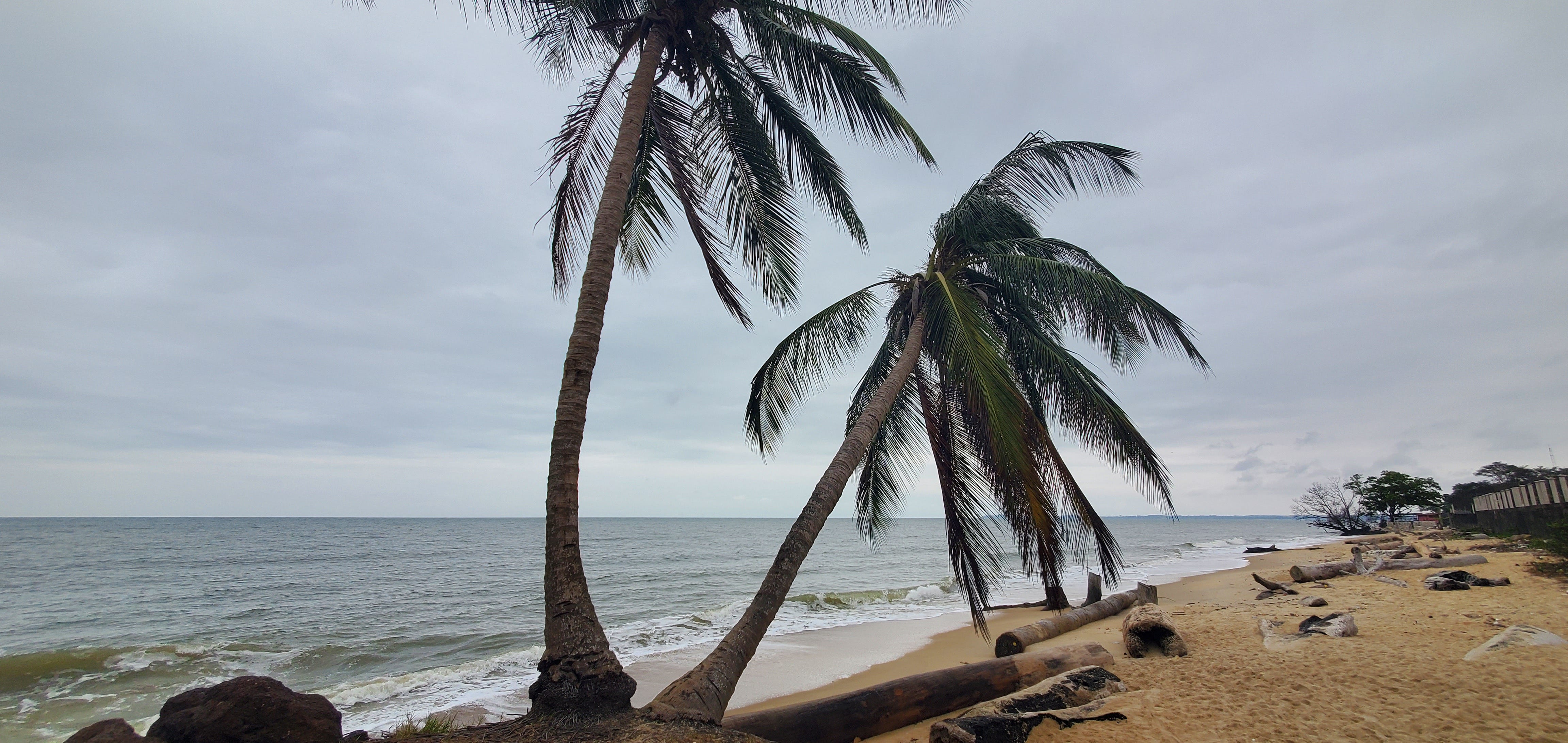
Our New Year’s Eve was a modest one. The kind that doesn’t complain about its own smallness. We ate crumbly canned-salmon cakes that fell apart under the fork (can’t get this one right), over-soft frozen asparagus that tasted faintly of the freezer, spinach and chive pasta brought back from Trader Joe’s months earlier and rationed for a night that felt like it ought to be marked somehow. I drank the last of my Union Craft Brewery beers. We opened a petite bottle of champagne we’d carried home from Paris during a long layover, more souvenir than indulgence, its pop restrained, almost apologetic.
Inside, all was rather typical and subdued. Outside, the evening held a steady quiet that suggested no late and loud parties or fireworks displays. This was all just fine with us.
Later, stretched out and quiet, watching something on TV, there were sounds that suggested movement beyond the walls. A low, distant percussion that could have been thunder, or could just as easily have been the surf at high tide breaking against the seawall beyond the compound. The difference mattered less than the uncertainty. The sound came and went, indistinct enough to be ignored. When we finally went to bed—well before the hour that would officially usher in a new year—it felt reasonable, even responsible.
For a while, the storm remained generous, gentle. Rain arrived softly, rhythmically, a familiar cadence that invited sleep rather than interrupting it. Lightning flickered at a distance, illuminating the room just enough to register through closed eyelids. The delay between flash and sound was long enough to count, enough space to reassure. One Mississippi. Two. Three. The kind of storm that functions like a memory, comforting precisely because it seems contained, one of nature’s best sound machines.
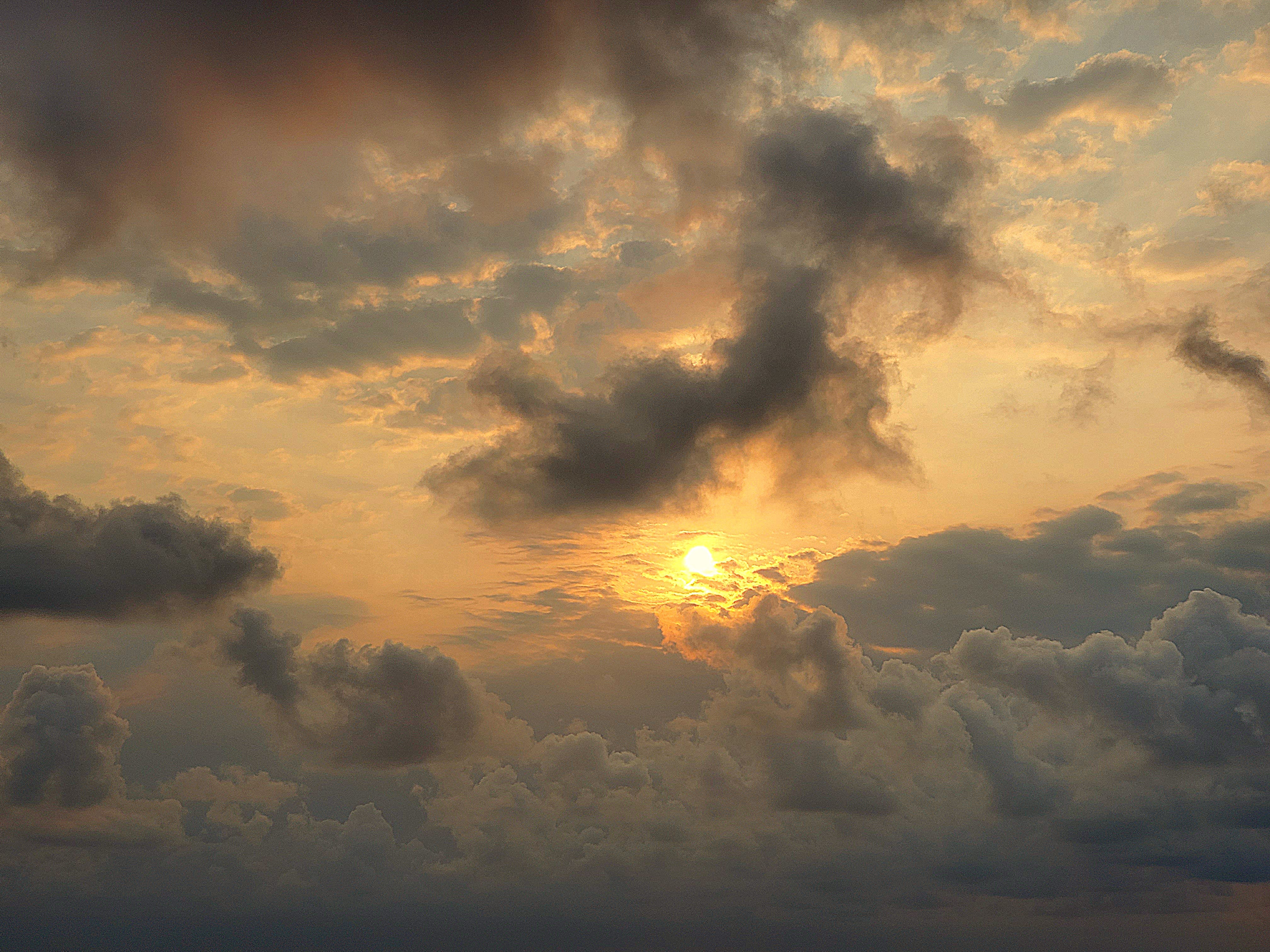
But the intervals shortened. The space between light and sound steadily collapsed. The thunder no longer rolled politely across the distance but pressed itself into the structure of the house, vibrating through walls, into the frame of the bed, into the body itself. By midnight, the metal roof was roaring under the weight of the rain, a sustained metallic clatter that drowned out the rush of the air conditioner and the mechanical breath of the dehumidifier. Lightning came in rapid succession now, a constant staccato that filled the windows, the room, the inside of the skull. The strikes were no longer elsewhere. They were near enough to erase any separation between seeing and hearing—no count, no warning—only the immediate, cracking violence of impact announcing itself all at once.
I have seen and heard plenty of wild thunderstorms in my life—Gabon’s have impressed me like no other.
I got out of bed and went to the windows, drawn there by something older than curiosity. Lightning tore the sky open in clean, violent, shattering lines, briefly revealing the ocean beyond the compound wall—black water thrown into sudden relief, whitecaps flashing and vanishing before the eye could settle. It was impossible not to feel awe. The scale, the certainty, the way the storm announced itself, again and again, unrelentingly without apology.
From inside the house, buffered by walls and glass and infrastructure, the danger felt abstract, almost theoretical, certainly theatrical. The violence translated as spectacle. Power without consequence. It thrilled, unsettled, but it did not worry me that somehow we might be in danger.
And yet the same force that filled me with wonder carried a different weight beyond these boundaries—this was a dangerous storm. In lesser, more precarious places, this was wind that could unroof a house, rain that could overwhelm and flash into a flood lightning that had to land somewhere. I watched long enough to forget that. Long enough for admiration to smooth over the fact that this was not simply sound and light but unrelenting energy, capable of becoming loss without warning.
Eventually the storm began to loosen its grip. Thunder retreated into longer intervals. The rain softened, then thinned, until the roof registered only its echo. The lightning grew less insistent, flashes spaced farther apart, as if the sky were exhaling. I returned to bed.
The machines in the house reclaimed their steady labor—the air conditioner’s rush, the dehumidifier’s low mechanical churn—familiar sounds reasserting order. Sleep came unevenly, then all at once.
And somewhere in that half-dreaming space, I was back in Hanford, a rare thunderstorm moving across the flat land of the San Joaquin Valley, my father beside me in the dark where we had made a pallet of blankets on the floor, teaching me to listen past the thunder to the oscillating fan. The slow, predictable sweep of it. Back and forth. Back and forth. A way of reminding a nervous child that storms pass, that our house would hold, that even a reasonable fear of the primal forces of nature can be set down—at least for the night—when safety is close enough to dismiss it all as air and light and water.
The Place Where it Lands
The next morning arrived without much ceremony, starting and progressing methodically. Somewhere short of noon Jill prepared eggs, potatoes, and a serviceable version of pigs-in-a-blanket as a kind of homage to tradition. We had no orange juice, nor champagne left, to compliment it with a mimosa. Oh, well.
The storm had cleared itself away sometime before dawn, leaving behind the ordinary brightness of morning and the quieter evidence of rain: damp concrete, pooled water along the edges, palm leaves and roof eaves still dripping. The ocean had grown still and flat.
The house resumed its routines, or rather, on this holiday morning, indulged in the lack of one. We lounged in our pajamas late, scrolling and reading, letting the cat lick the egg residue off the breakfast plates on the coffee table. Nothing about the morning suggested what had occurred during the night beyond our walls.
I learned about the fire the way most distant tragedies now arrive: casually, almost incidentally. In the unspooling of social feeds that demand and distract the attention, that require diligence to filter through and not yet the important pieces slip into the stream.
Among the more traditional and force-fed content of my feed, and though my French is infantile, it was serviceable enough for me to take notice of a particular article that appeared. Breaking news, it courted. A time stamp marked the article just minutes old. Google translate helped me to make sense of the rest. [You can click below to access the article for yourself]
Akanda is a small town by many American standards, with something less than 40,000 residents, although this puts it as Gabon’s 10th largest community. It is in the same province as Libreville, and is in fact the provincial capital, even though Libreville is the capital of Gabon. We’ve passed through Akanda a few times on our way north to Cap Esterias, a seaside village popular on weekends for lunch and a temporary oceanside escape. What I mean to point out is that there isn’t much to distinguish Akanda from Libreville but a few minutes down the road.
I read on…
“While the country was celebrating…a family lost everything. A fire of incredible violence, caused by lightning, which reduced a home to ashes, leaving” its victims “in total destitution.”
The phrasing was efficient. Calamitous cause and consequence compressed into a few sentences. The storm we had listened to, even admired, had found a place to land and bring with it ruin.
The details were spare, and because of that, difficult to evade. The testimony was filled with the emotional color of those who had lost nearly everything outside of their lives.
Apocalyptique. Catastrophique. Tragique.
A father who could not protect his family from the fury of nature. Two pregnant women. Their pregnancies already precarious, now more so. Fleeing out into the night, alive but newly exposed. A high school student whose school supplies were lost along with everything else. A family’s house destroyed, its contents burned and the ruins soaked, the fire extinguished only after it had taken what it came for.
Two photographs accompany the article, of the women standing in front of the desolation that must have once been their home. Another of smoking remains. Just enough information to establish that lives had been altered in ways that would not recede as easily as the storm had.
The night before, I had stood at the window and watched the lightning carve up the sky, the ocean briefly revealed in violent contrast. From where I stood, the storm registered as force without consequence. A spectacle contained by glass and reinforced walls. The fire forced a recalibration. It did not retroactively strip the storm of its power or beauty, but it redefined them. What I had experienced as awe had arrived elsewhere as intrusion—sudden, unwelcome, irrevocable.
Apocalyptic. Catastrophic. Tragic.
It would be easy to linger here, to inflate the moment with borrowed grief, to imagine the family’s fear or attempt to reconstruct the night from their position. I resist that. Their loss does not require my elaboration. What belongs to me is the recognition of how cleanly my experience separated from theirs. The same storm passed through both of us, but only one of us was asked to pay for it.
There is something instructive in how quickly I returned to equilibrium that night and morning after. How easily the house absorbed the storm and resumed its functions. The air conditioner clicked on. The refrigerator hummed. Water ran when I turned the tap. Infrastructure performed its quiet miracles. Safety asserted itself not as a feeling but as an environment. I did not have to decide what to save. I did not have to inventory what was missing.
The fire lingered as an abstraction, and that abstraction was itself a form of protection. I could carry it lightly, think about it intermittently, fold it into a larger meditation about storms and power and inequality. The family could not. For them, the storm would not recede into memory or metaphor. It would remain lodged in the practical questions that follow catastrophe: where to sleep, what remains, what comes next.
Who can help us? Who will help us?
The pregnancies would continue under altered conditions. The student would return to school with trauma instead of notebooks and homework. Loss would unfold not all at once, but daily.
The realization did not arrive as guilt so much as clarity. Awe, I understood, is not neutral. It is shaped by position. By walls. By distance. The storm had offered me a reminder of power without demanding anything in return. It had allowed me to admire and forget. Their fire refused that. It insisted that the force I had watched from safety does not dissipate harmlessly into the night.
It concentrates. It selects. It lands.
I went back to the window later that day. The sky was unremarkable. The ocean calm enough to be ignored. Nothing about the landscape suggested what it had delivered hours earlier. That, too, felt instructive. The world does not mark all of its violence for us. It does not signal where attention should linger. It moves on. And if we are protected enough, we move on with it—unless something interrupts the ease of that motion and reminds us that every spectacle has an endpoint, and every endpoint belongs to someone.
If you are getting the sense that this is not just a literal story, but a metaphor for other things—pertinent things happening all over the world—good. The point is coming across.
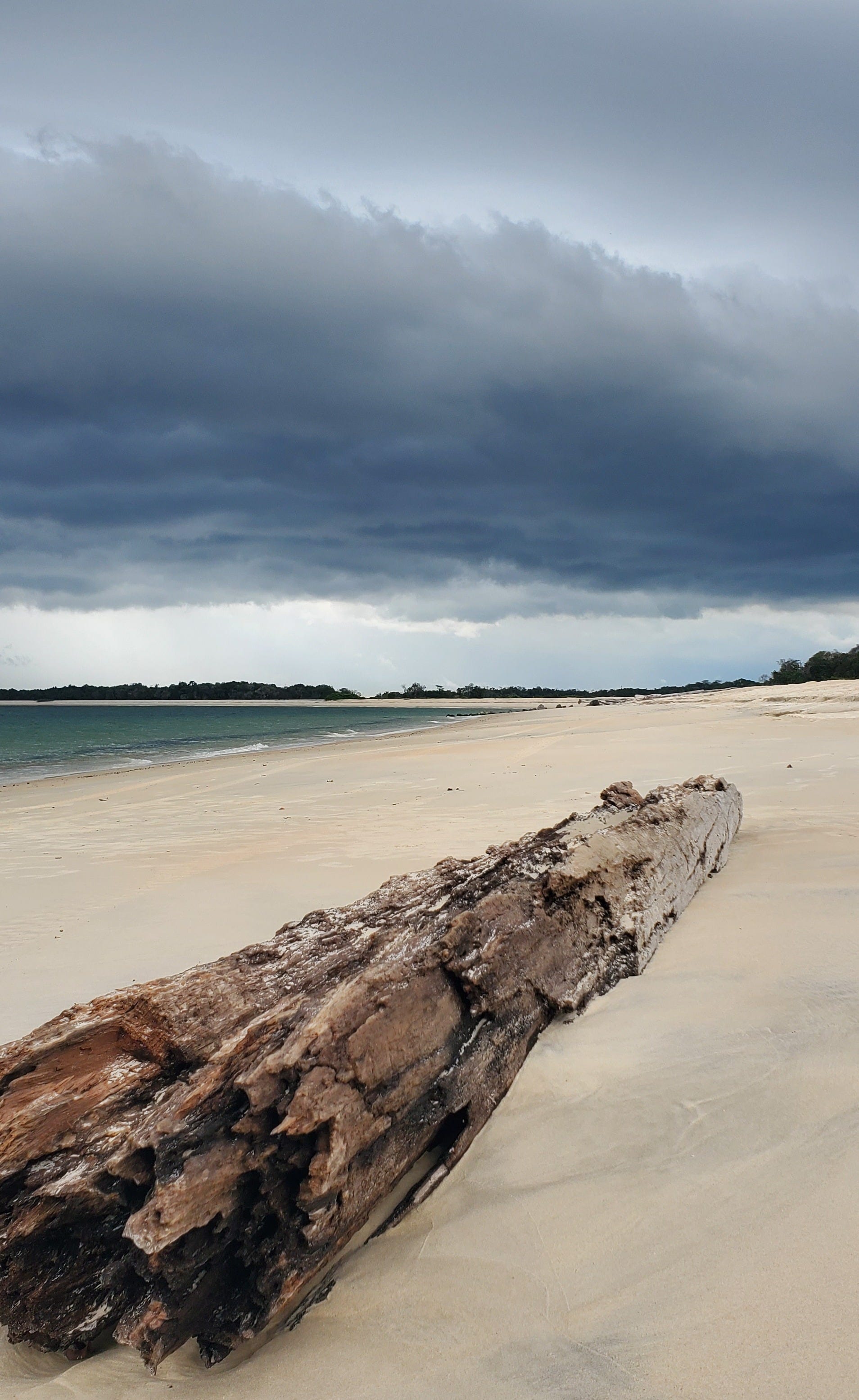
The Same Weather, Unequal Ground
I am reminded of another storm.
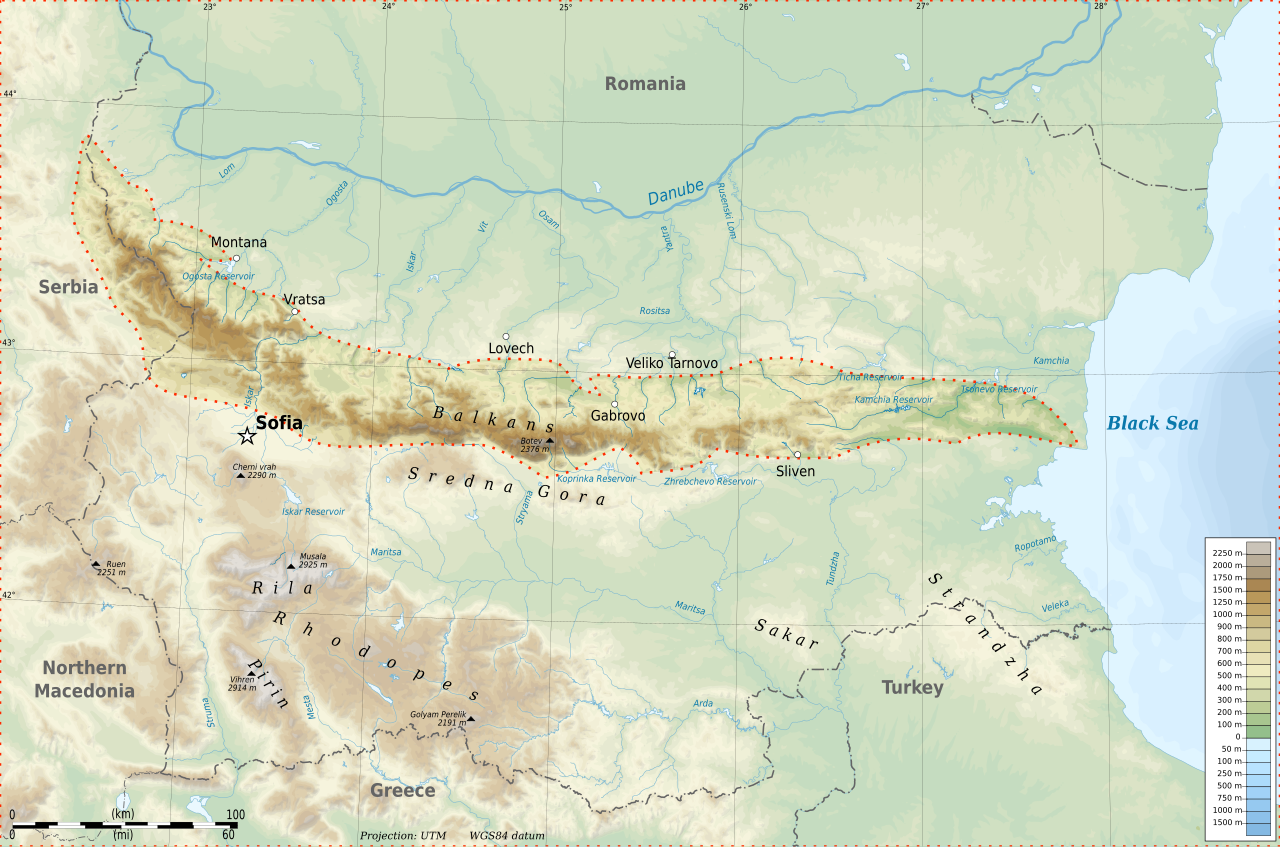
It was more than twenty years ago. It was mid-June, I think, somewhere in the second month of my time as a Peace Corps volunteer. I was, like all my fellow PCV’s who’d just embarked on that two year mission, living with a host family, in a small town (half the size of Akanda) in central Bulgaria.
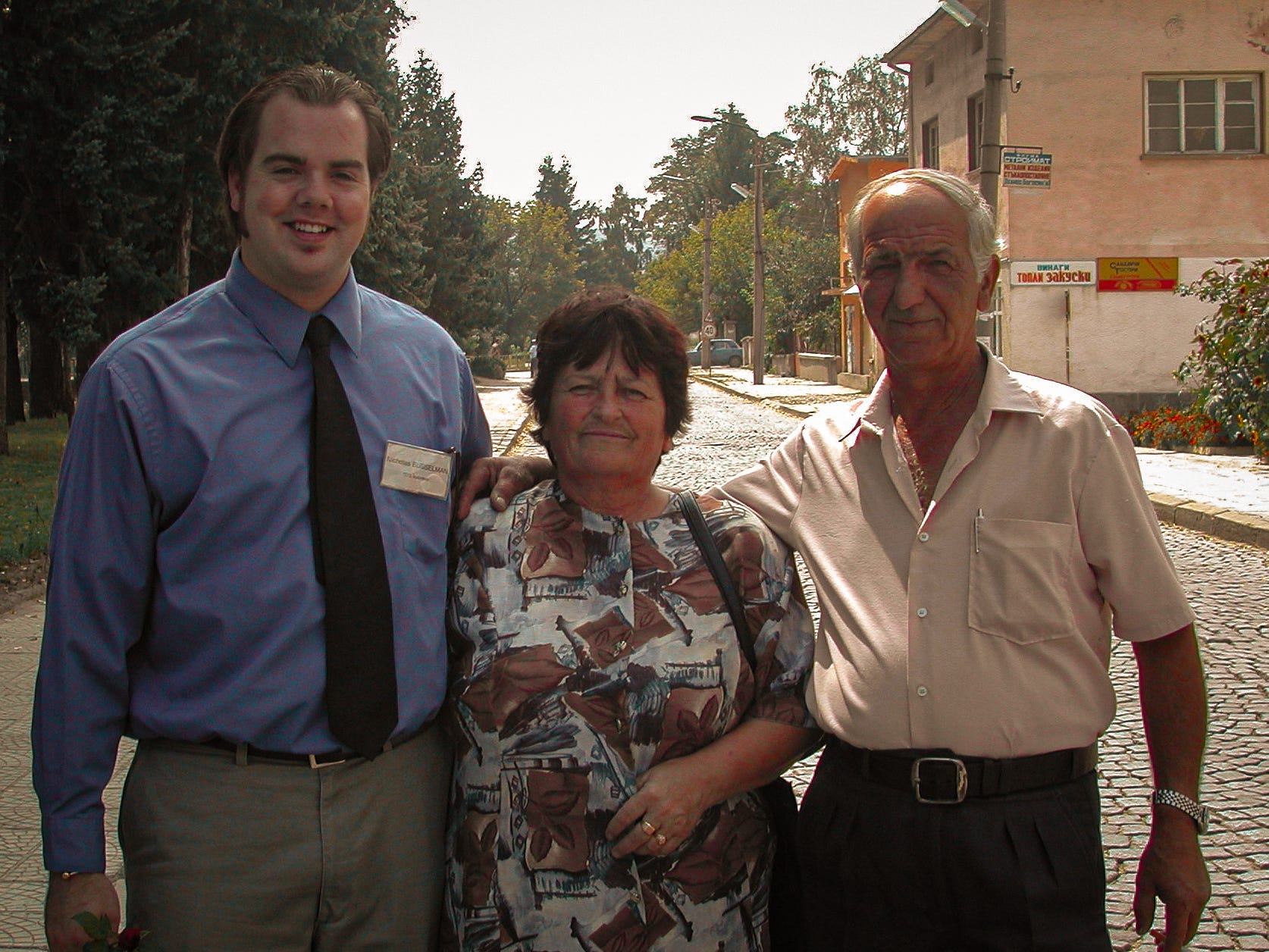
The Musolovi’s. An elderly couple whose two adult children and four grandchildren lived elsewhere in the town and whose home had opened to me so fully and quickly that I already felt like family. Part adopted son, part beloved grandchild.
Summer in Bulgaria was very midwestern. Hot and humid, a surprisingly intense sun, prone to afternoon rain unfolding along the spine of the Stara Planina (the Balkan mountains) and across the Sredna Gora (foothills), where towns and villages occupy the many valleys. Panagyurishte is among them.
The day in focus had been heavy with heat, the air unmoving, the sky a unblemished blue, and yet carrying that particular tension that announces change before it explains itself. Perhaps that is intensified in retrospection, a bit of my own dramatization, but weather does have a knack for its own foreshadowing, doesn’t it?
It was the kind of oppressive warmth that made ambition feel arrogant, even faintly ridiculous. After breakfast (rose hip and raspberry tea, eggs fried in a literal pool of sunflower oil, Panagyurishte style), Saturday progressed without expectation, and I accepted it as such. I had no plans, no urgency, nothing that required me to leave the house or test myself against the afternoon. I moved slowly from my room to the kitchen, lingering in doorways, drinking water, reading on the daybed, letting the hours soften and pass.
She did not.
My host mother moved with a restlessness I didn’t yet know how to read. Windows were opened, then closed. A basin was shifted closer to the door, potted plants moved, some out into the courtyard, others under cover. The grape vine was surveyed. Mitsi, their dog, was moved under the cover of the shed in the back of the property.
Now inside, she paused often, one hand braced against her hip, her eyes lifting briefly toward the sky before returning to whatever small task claimed her next. It looked like fussing. It felt, to me, unnecessary. Yes, I should have asked. I should have known better and helped.
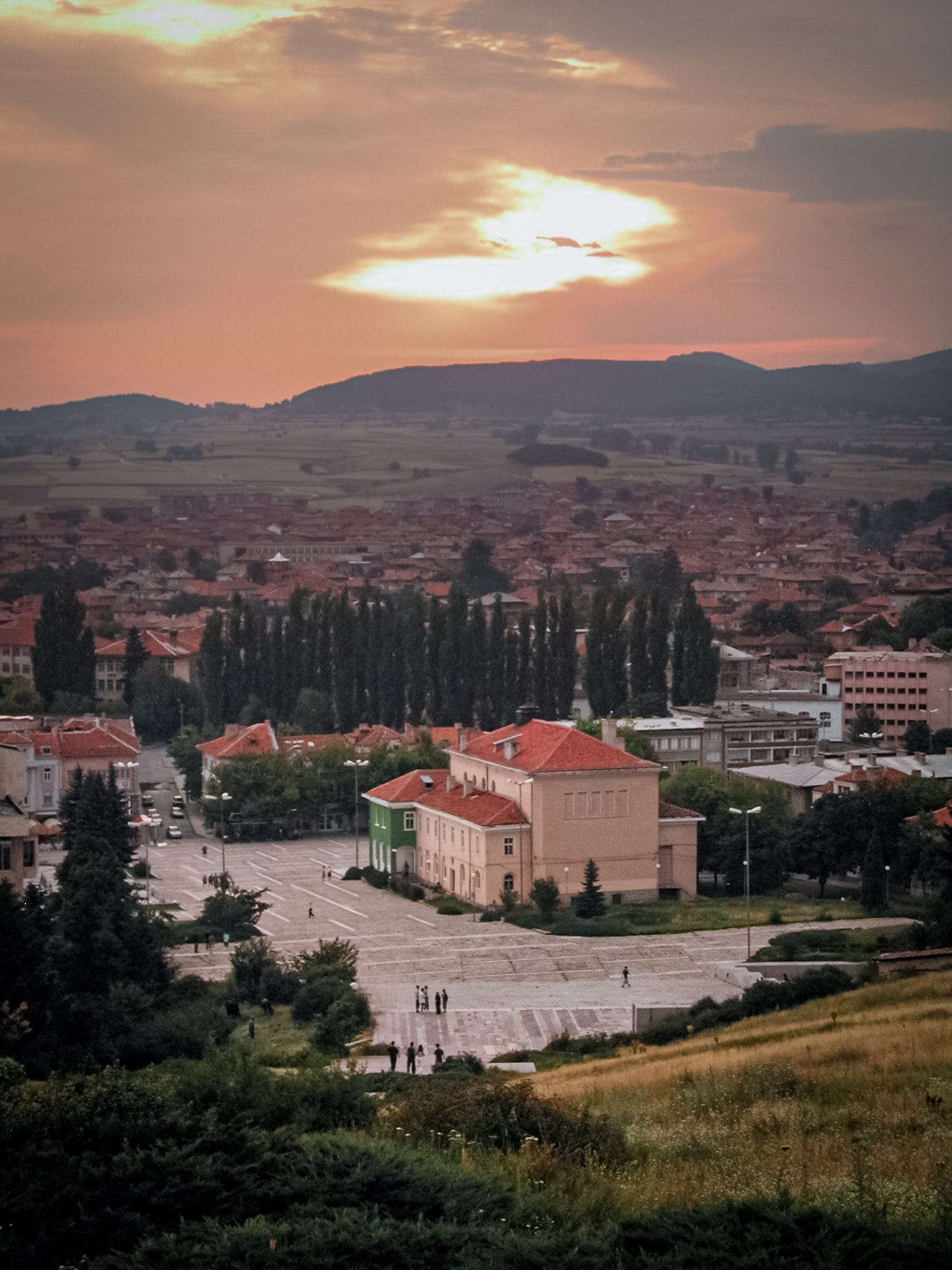
Outside, the sky remained an unbroken blue. Not a cloud in sight. And yet the light had begun to dull, imperceptibly at first, as though someone were lowering a dimmer I couldn’t see. The air thickened. The stillness grew heavier, less benign.
The first thunder arrived as a tear in the afternoon—one long, ripping sound that seemed to split Panagyurishte open.
When the storm broke, it did so all at once. Rain fell in dense, slanted sheets. Thunder echoed sharply off the low hills and concrete houses, the sound travelling back and forth through the town.
I stood at the kitchen window and watched, transfixed. Soon, the gutters filled and then covered the street. Water surged down the narrow road, transforming it into a brown river that flowed toward the town center. Lightning fractured the sky. It was thrilling. Rare. I felt the kind of wonder reserved for disruptions that don’t belong to you, the pleasure of witnessing something powerful from a place of presumed safety.
I think I remember this so well because of the contrasts, of what else was happening, and would be realized after.
In the kitchen behind me, my host mother moved quietly. I noticed her only when the rhythm of her motion changed—when she stopped and stood still. She murmured something under her breath, a series of words I could not yet translate to understand, her hands pressed together loosely at her waist. It took me a moment to realize she was praying. Not dramatically. Not urgently. Just enough to acknowledge what was unfolding beyond the walls.
At the time, I registered this as cultural difference. Faith responding to spectacle. I returned to the window. The storm intensified, thunder, rain pounding hard enough to obscure the far end of the road. I remember thinking how lucky I was to be there, to witness something so elemental, so removed from the controlled environments I was used to. I did not consider that the storm was not finished with its work.
The next day, Sunday, we went out to the small plot of land my host parents cultivated on the edge of the town. It was not large, but it mattered. Rows of tomatoes, cucumbers, beans, zucchini, hot peppers—summer crops grown not as hobby or pastime but as sustenance, a buffer against the economic uncertainty that still lingered in the post-communist years. The field bore the storm’s translation. Plants bent low or broken entirely. Leaves shredded by hail. Stems snapped, fruit bruised and split. The ground was littered with what had been standing the day before.
There was no ceremony to the assessment. No overt despair. Just inventory. What might recover. What was lost. What could be salvaged. We knelt in the mud and began to work, lifting plants carefully, straightening what could be straightened, removing what could not be saved. There hands moved with practiced efficiency. I did my best to watch and repeat. (I was not then the better gardener I would later become.)
The storm had passed, but its consequences had not.
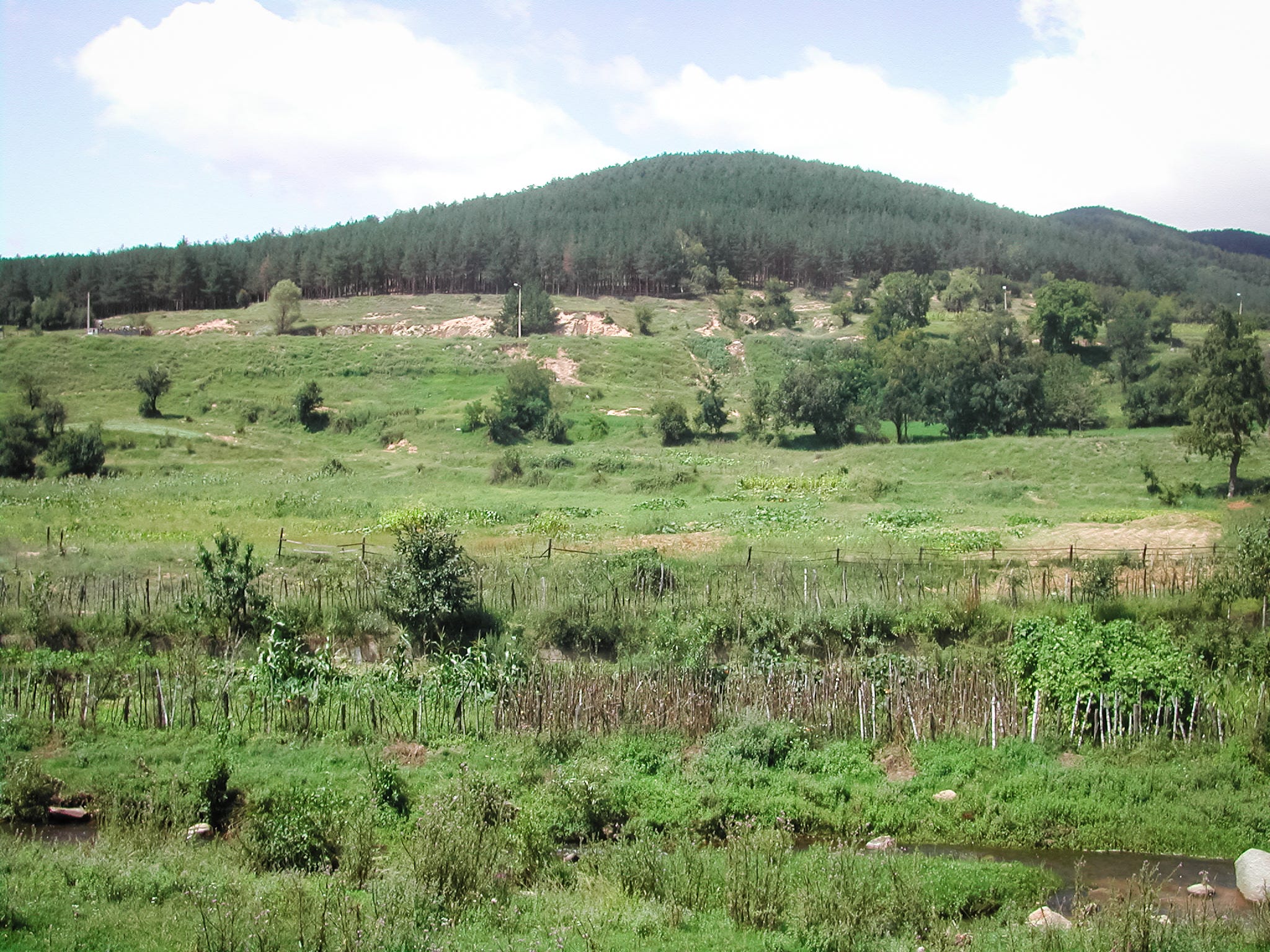
It was there, in that field, that the storm changed shape for me. Every storm thereafter would too.
What I had admired the day before as force and drama revealed itself as subtraction. The wonder drained out of it, replaced by labor and calculation. The storm had not been a shared experience in the way I had imagined. I had watched it arrive and leave. They had to live with what it took and what it would take to bring it back.
I thought then of my host mother in the kitchen, her quiet prayers forming a counterpoint to my fascination. She had not been responding to the storm as spectacle, but as risk. Her attention had already moved beyond the sound and light to the likely outcomes. The storm was not an interruption to be enjoyed but a threat to be managed, a force capable of undoing weeks of work, if not a lifetime, in a matter of minutes.
That recognition did not arrive with shame so much as adjustment. A recalibration of scale. The storm was never the same storm for both of us. It only felt shared because I did not yet know what it could cost. My position allowed me to mistake proximity for equivalence, wonder for understanding.
I think of that field now when I think of the night (a few weeks ago now) in Gabon—as I think somewhere in every moment of admiration when nature makes a show of itself.
Of how easily awe arrives when loss does not. Of how safety reframes violence as beauty, power as entertainment. The storms I remember most vividly are not defined by their sound or light, but by what followed them—by who had to bend down into the wet ground afterward and decide what, if anything, could be saved.
Wonder is Not Neutral
I think now about how easily distance converts force into fascination.
How quickly sound and light become something to admire once they are no longer aimed at us. The storm in Gabon, the fire in Akanda, the field in Bulgaria—together they form a quiet grammar for reading other moments that arrive already framed as spectacle. Images that circulate without weight. Events absorbed through screens and translated into drama, novelty, or background noise. The farther away the lightning strikes, the easier it is to forget that it lands at all.
Wonder can numb. It smooths edges. It allows power to appear abstract—sometimes even elegant. From a safe enough distance, violence sheds its urgency and becomes aesthetic: something to be shared, discussed, admired. Fascination steps in where responsibility might otherwise linger. What we do not feel in our bodies, we struggle to hold in our conscience.
Safety changes the meaning of what we admire. It turns threat into atmosphere, disruption into performance. It encourages the quiet assumption that survival is universal—that what passes through us without damage must pass the same way everywhere else. The storms that remain most vivid are often the ones that asked nothing of us beyond attention.
Lightning remains the clearest metaphor I know. It is instantaneous, spectacular, and selective. It does not disperse evenly. Every flash announces power, but every strike has a location. Every spectacle lands somewhere, whether or not we are close enough to hear it, see it, or feel the ground respond.
I do not write this from a place of exemption. I still go to the window when storms arrive. I still feel my body answer their scale and certainty. I still experience awe. What has changed is my ability to pretend that awe is harmless—to believe it floats free of consequence, detached from the labor and loss that follow in its wake.
Some nights, even now, I fall asleep to the steady machinery of the house—the fan, the air conditioner, the systems designed to keep weather at a distance. I think of my father teaching me to listen through the turmoil, to recognize the sounds that meant safety rather than danger. That lesson still works. It still calms me.
Another storm will come. It always does. I will listen. I will watch. I will feel the pull of wonder again. I just no longer believe that wonder is neutral—or that the places where lightning does not land are the measure of what the storm has done.
Beautiful writing, and incredible photographs. Curious: are you currently using a iPhone camera, or a traditional camera? (Or both?)